How to Follow Up After a Job Interview, With Email Examples
The interview went well, you shook hands, and now the inbox is quiet. Most candidates either send nothing at all or send three anxious emails in a week, and both cost them.
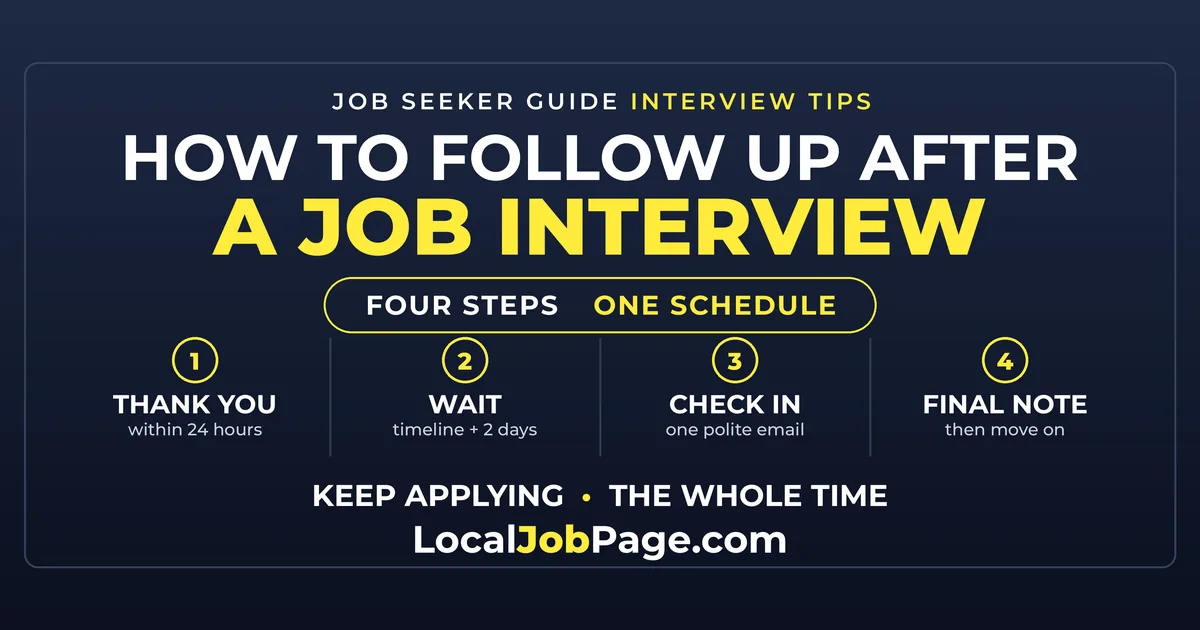
A good follow-up is four small moves on a schedule: a thank-you within a day, patience until the hiring timeline passes, one polite check-in, and one final note before you move on.
Just want the openings? Skip straight to the job links and begin searching now →
Step 1: Send a Thank-You Within 24 Hours
The thank-you note is the one follow-up nobody should skip. It reminds the interviewer who you are while the conversation is still fresh, and it gives you one more chance to connect your experience to what they said they need.
Email is standard for almost every job now. A handwritten card can still land well at a small office, but send the email first.
Keep it to four or five sentences. Thank them, mention one specific thing from the conversation, tie it to something you can do, and close. If you met with several people, send each a separate note, and change the specific detail so the messages do not read as copies.
Example:
Subject: Thank you, shift supervisor interview
Hi Ms. Ortiz, thank you for taking the time to meet with me this morning. I enjoyed hearing how your team is preparing for the new loading dock schedule. My two years running opening shifts at my last job lined up well with what you described, and I would be glad to help that changeover go smoothly. Please let me know if I can send anything else. Best, Jordan Lee, (555) 555-0142
Put your phone number in the signature. Hiring managers for hourly roles often call rather than write back.
Step 2: Wait Out the Timeline They Gave You
Before you leave any interview, ask one question: "What are the next steps, and when should I expect to hear back?" The answer sets your whole follow-up schedule.
If they said "by the end of next week," do nothing until that date passes. Then give it two more business days, because hiring timelines slip constantly. Silence in that window usually means the process is slow, not that you lost.
If nobody gave you a timeline, wait about a week after your thank-you note before checking in.
Step 3: Send One Polite Check-In
The check-in has one job: confirm you are still interested and ask where things stand. It is not the place to re-argue your qualifications or to sound hurt.
Example:
Subject: Checking in, shift supervisor position
Hi Ms. Ortiz, I hope your week is going well. I wanted to follow up on my interview on the 3rd for the shift supervisor role. I am still very interested and would be glad to provide references or anything else that would help. Is there an updated timeline for a decision? Thank you, Jordan Lee
Reply to your original thank-you email so the whole thread stays together. If the recruiter set up the interview, send it to the recruiter, not the manager.
For retail, restaurant, warehouse and other hourly roles, a short phone call or a stop-in during a slow hour is often normal, and sometimes faster than email. Ask for the manager by name, keep it under a minute, and do not show up during a rush.
Step 4: Send a Final Note, Then Move On
If the check-in gets no reply, wait about another week and send one last message. Keep it short and gracious: you are still interested, you understand they are busy, and you would welcome the chance to be considered for future openings if this one goes another way.
After that, stop. More messages will not change a decision, and a gracious exit leaves the door open. Employers often go back to their second choice when a new hire does not work out, or when a similar role opens a month later.
Keep applying the whole time. The best leverage you can bring to any follow-up is another interview on your calendar.
🚩 Follow-Up Mistakes That Cost Candidates
- Following up the same day as the interview, then again the next. One thank-you is enough until the timeline passes.
- Connecting with the interviewer on social media and messaging there. Keep follow-up in email unless they invited another channel.
- Copy-pasting one note to every interviewer. Interviewers compare notes, and identical messages read as careless.
- Guilt or pressure. "I haven't heard anything and I'm getting worried" makes the reader uncomfortable, not eager to hire.
- Typos and the wrong name. Read it once out loud before sending, and check the spelling of every name.
- Mentioning another offer you do not have. If you do have a real offer with a deadline, say so plainly and ask whether they can share a timeline. That is fair and professional.
🔎 Search Jobs Now
- Jobs hiring immediately
- Customer service jobs
- Administrative assistant jobs
- Retail associate jobs
- Warehouse jobs
- Medical assistant jobs
- Shift supervisor jobs
- Walmart jobs
Keeping two or three applications moving at once makes every follow-up easier to write.
🗺️ Where to Look in Your City
Follow-up etiquette works the same everywhere, so here is a spread of network markets across every region of the country to keep your search moving locally.
- Jobs in New York
- Jobs in Chicago
- Jobs in Houston
- Jobs in Atlanta
- Jobs in Phoenix
- Jobs in Los Angeles
- Jobs in Denver
- Jobs in Philadelphia
- Jobs in Seattle
- Jobs in Nashville
Not on the list? Find your city.
Frequently Asked Questions
How long should I wait to follow up after a job interview?
Send a thank-you within 24 hours. After that, wait until the timeline the interviewer gave you has passed, plus two business days. If no timeline was given, wait about a week before checking in.
Is it OK to call instead of emailing?
For hourly roles in retail, restaurants and warehouses, a short call is often normal. For office and professional roles, email is the safer default unless the interviewer asked you to call.
How many times should I follow up?
A thank-you note, one check-in after the timeline passes, and one final note about a week later. Beyond that, extra messages rarely help and can hurt.
Who should I send my follow-up to?
Whoever coordinated the interview. If a recruiter scheduled it, follow up with the recruiter. If you dealt only with the hiring manager, write to them directly.
Does no response mean I didn't get the job?
Not necessarily. Hiring often slows for approvals, vacations or extra interview rounds. But silence after two follow-ups is a sign to put your energy into other applications.
Should I follow up if I was rejected?
A brief, gracious reply thanking them and asking to be considered for future openings is worth sending. It costs nothing and sometimes leads to a call when the next role opens.
Keep More Than One Door Open
Follow-up works best when you are not counting on a single employer. Create a free job seeker account on LocalJobPage, set alerts, and browse all jobs so there is always another application in motion.
Employers: candidates follow up because they want to hear back. Post your openings, share a clear timeline in the interview, and see pricing for reaching job seekers across all 50 cities in the network.
Related Reading
- Common Job Interview Questions and How to Answer Them
- How to Negotiate a Job Offer, Even for an Hourly Job
- How to Write a Cover Letter That Gets Read
- How to Spot a Job Scam Before You Apply
Thank them within a day, check in once the timeline passes, close gracefully, and keep applying the entire time. That is the whole system.