How to Negotiate a Job Offer, Even for an Hourly Job
The offer comes in at $17 an hour and you were hoping for $19. Plenty of people in that spot say yes on the phone and spend the next year wishing they had asked. A polite ask is a normal part of hiring, and it can work on hourly offers as well as salaried ones.
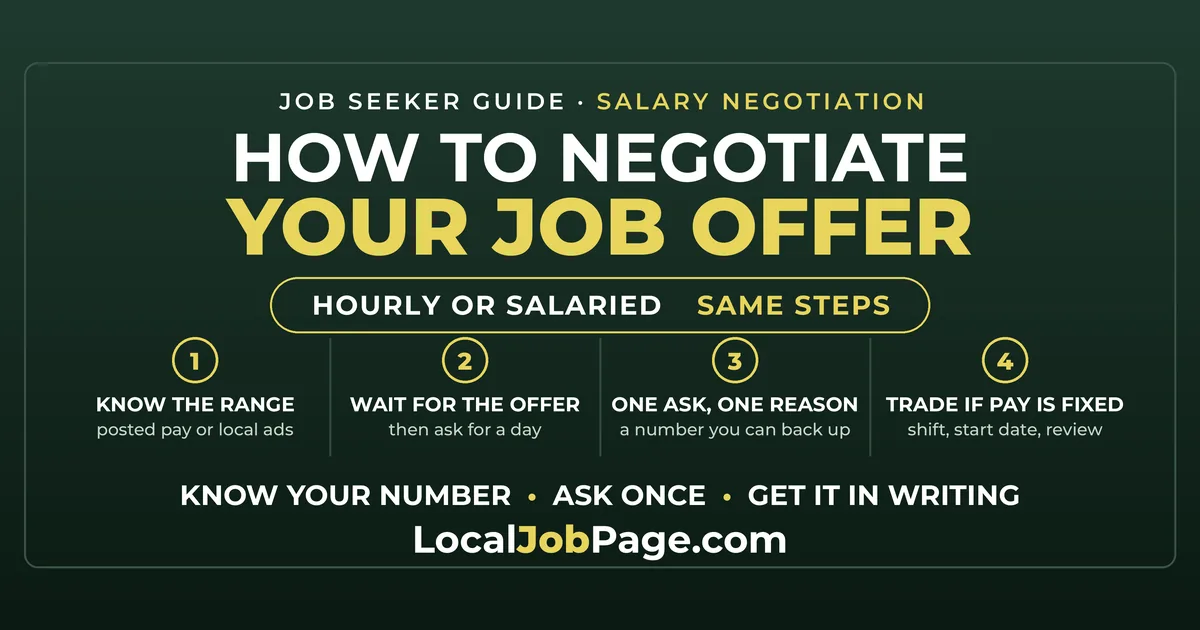
Five steps to negotiate a job offer: find the real number, wait for the offer, make one clear ask, trade for something else when pay is fixed, and get the final terms in writing.
Need work now? Skip straight to the job links and begin searching now →
1. Find the Real Number Before You Talk
You cannot negotiate against a number you do not know. Start with the posting. Thirteen states and Washington, D.C. now require many employers to put a pay figure in the job ad itself: California, Colorado, Connecticut, Hawaii, Illinois, Maryland, Massachusetts, Minnesota, New Jersey, New York, Vermont, Virginia and Washington. Some of those laws only cover employers above a certain size, so a small shop may not list one. Our pay transparency rules by state has the details.
If the posting shows a range, that is your playing field. An offer at the bottom leaves room; one at the top usually does not.
No range listed? Check what similar local postings pay. For a national benchmark, the Bureau of Labor Statistics Occupational Outlook Handbook lists the median pay for hundreds of jobs. A median is the middle: half the people in that job earned less.
Write down three numbers before any pay conversation: the lowest you would accept, what you will ask for, and the figure that would make you say yes on the spot.
2. Wait for the Offer, Then Ask
The strongest moment to negotiate is after the employer decides they want you and before you accept.
If an interviewer asks about pay expectations early, give a range built from your research rather than a single low number: "Based on what similar roles pay here, I'm looking at $18 to $20 an hour, but I'm flexible for the right fit."
When the offer arrives, thank them and ask for a day to look it over. "I'm excited about this. Can I get back to you tomorrow?" is a normal request, not a red flag.
3. Make One Clear Ask With a Reason
Pick one number, give one reason, and stop talking.
For an hourly job: "I'd love to accept. With my two years of forklift experience, could you start me at $19 instead of $17.50?"
For a salaried job: "Thank you, I want to make this work. Based on the range in the posting and my experience running the front desk at a busier office, I was hoping for $52,000. Is there room to get closer to that?"
Good reasons are specific: a certification, experience the job asked for, a shift nobody else wants, or another offer you actually have. Never invent a competing offer.
Then wait. If the answer is no, ask: "I understand. Is there flexibility anywhere else?"
4. When Pay Is Fixed, Negotiate Something Else
Some pay really does not move. Union jobs follow the contract. Big seasonal hiring pushes usually pay a posted rate for everyone in the same role and building. Many government jobs pay on a set scale.
Even then, something else is usually on the table:
- Schedule and shift. A day shift or fixed days off.
- Start date. An extra week before you begin.
- A pay review date. Ask for a raise review at 90 days or six months, in writing.
- Sign-on bonus or shift differential. Ask whether one exists for the role.
- Training. A paid certification or license.
One federal detail is worth knowing. Federal agencies can start a newly hired employee above the first step of a General Schedule grade for superior qualifications or a special agency need, under federal regulation 5 CFR 531.212. The agency has to approve it before you start work, so raise it before you accept, not after your first day.
5. Get the Final Offer in Writing
Once you agree, ask for the final offer in writing: the hourly rate or salary, the schedule, the start date and anything extra you negotiated. If something you discussed is missing, say so now, not after your first paycheck.
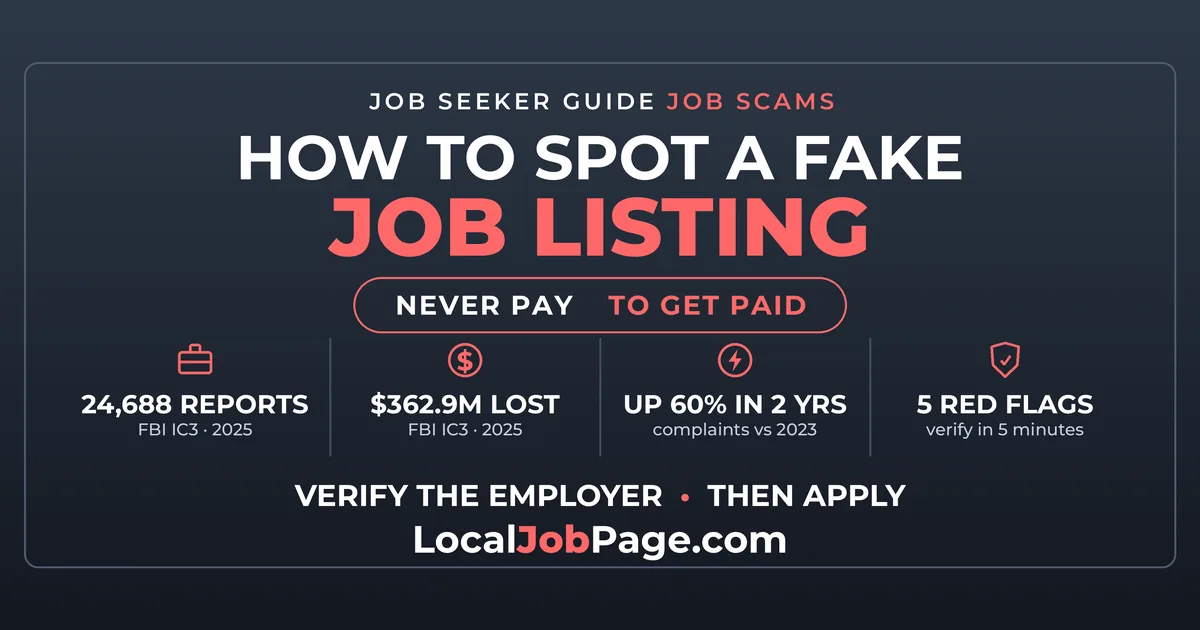
A real employer never asks you to pay for training or equipment to lock in an offer. If one does, read our guide on how to spot a job scam before you reply.
🔎 Find Jobs Worth Negotiating
The easiest negotiation is the one where you have options, so apply to a few jobs at once.
Start here:
- Full-time jobs
- Jobs with a sign-on bonus
- Remote jobs
- Customer service jobs
- Warehouse jobs
- Medical assistant jobs
- Night shift jobs
- Amazon jobs
- Target jobs
🗺️ Where to Look in Your City
These cities sit in states that require many employers to list pay in the job ad, so you can walk into the conversation already knowing the range.
- Full-time jobs in Los Angeles
- Full-time jobs in San Diego
- Full-time jobs in San Francisco
- Full-time jobs in Denver
- Full-time jobs in Washington, D.C.
- Full-time jobs in Chicago
- Full-time jobs in Baltimore
- Full-time jobs in Boston
- Full-time jobs in Minneapolis
- Full-time jobs in New York
- Full-time jobs in Virginia Beach
- Full-time jobs in Seattle
Not on the list? Find your city.
Frequently Asked Questions
Can a job offer be taken back if I negotiate?
It can happen, but a polite single ask with a reason is a normal part of hiring. The risk rises if you make demands, keep pushing after a clear no, or invent another offer.
Can you negotiate pay for an hourly job?
Often, yes, especially if you bring experience, a certification or availability for hard-to-fill shifts. When the rate is fixed for everyone, ask about schedule, shift differentials or an early pay review instead.
How much more should I ask for?
Ask for a number you can back up with the posted range, similar local postings or your experience. Stay inside the posted range when there is one. A specific figure works better than a round jump.
What if the employer says the offer is final?
Believe them and decide whether the job works at that pay. Before you answer, ask whether anything else can move, such as the start date, schedule or a review date.
Ask Once, Then Start Strong
You do not need a perfect script, just a number, a reason and the patience to wait for an answer. Create a free LocalJobPage account to save searches and get new postings as they go up, or browse all jobs near you so you have more than one offer to weigh.
Employers: listing pay up front saves you time on both sides of the table. Post your openings on LocalJobPage and reach job seekers in 50 cities.
Related Reading
- Common Job Interview Questions and How to Answer Them
- What Your Job Post Must Include: Pay Transparency Rules by State
- Minimum Wage 2027: Which States Have Set Their January 1 Rate
- How to Write a Resume With No Work Experience
- How to Spot a Job Scam Before You Apply
Know your number before the call, ask for it once, and get the yes in writing. The few minutes it takes can follow you into every raise after.